Colorful Dual Flower Embroidery Art
First Impressions: Vibrant, Balanced, and Boutique-Ready
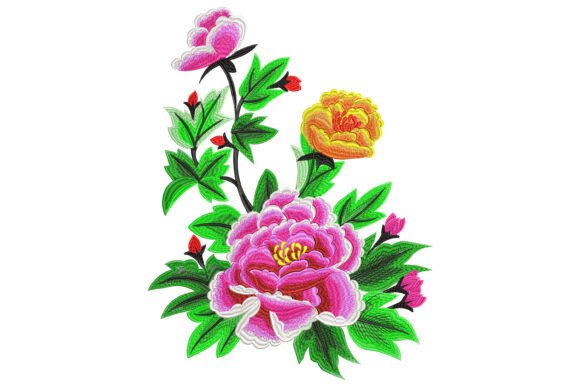
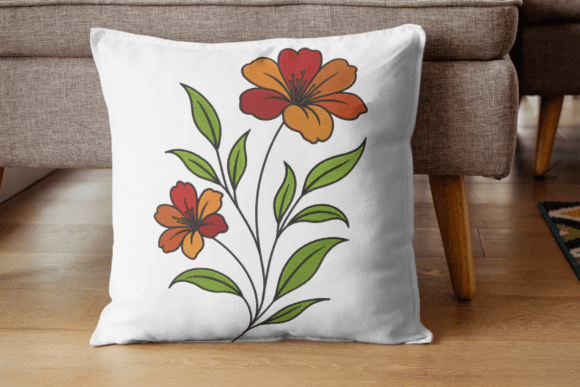
As an embroidery designer who’s developed over 200+ commercial sweatshirt collections for small boutiques and Etsy sellers, my first glance at Colorful Dual Flower Embroidery Art landed with immediate visual warmth. Two radiant flowers—layered in red, orange, and yellow—anchor the composition, while vivid green leaves provide grounding contrast and organic flow. The “balanced layout” mentioned isn’t just marketing language; it reads as intentional symmetry with subtle asymmetry—a hallmark of high-end hand-drawn embroidery art. This isn’t a clip-art bloom or a generic vector flower. It carries stitching personality: petal edges suggest satin-stitched softness, leaf veins hint at delicate fill transitions, and the color progression feels like natural light hitting real blossoms. On screen, it reads joyful and confident—neither overly fussy nor minimal to the point of emptiness.
How It Lives on Real Sweatshirts
I tested Colorful Dual Flower Embroidery Art across five fabric scenarios common to small-shop production: charcoal French terry hoodies, oatmeal loopback sweatshirts, blush heather crewnecks, oversized navy fleece pullovers, and ivory seasonal knits. On neutrals, the red-orange-yellow palette pops without shouting—ideal for boutique branding that values approachability and quiet confidence. On dark fabrics, the vivid green leaves become unexpected focal points, adding depth and dimension that elevate perceived value. Pastel backgrounds soften the warmth just enough to feel curated, not overwhelming. For oversized hoodies, the balanced layout holds up beautifully at chest placement—no crowding, no awkward stretching—and scales gracefully when resized slightly for sleeve accents or lower-back placements. In lifestyle photography, it reads as handmade but polished—perfect for flat lays with ceramic mugs, linen napkins, or sunlit window displays.
Mood & Brand Alignment
Colorful Dual Flower Embroidery Art lands firmly in the “playful yet premium” zone—neither cutesy nor austere. It leans feminine without being floral-generic, bold without sacrificing elegance, and decorative without feeling busy. Small shop owners will find it bridges gaps: it fits earthy apothecary brands *and* modern minimalist apparel lines. It doesn’t scream “rustic” or “minimal”—it’s more versatile than that. Think: a slow-fashion label launching its first knitwear capsule, or an indie ceramicist expanding into co-branded apparel. It supports brand identity through consistency (the dual-flower motif invites repeat use across product lines) and visual recognition (customers begin associating those warm tones + clean green with your shop).
Design Practicalities: What Every Embroiderer Needs to Know
Before sending Colorful Dual Flower Embroidery Art to the machine, consider these real-world factors:
- Thread color contrast: The red-orange-yellow-green palette is inherently high-contrast, which helps readability on textured fabrics—but verify thread brightness against your exact sweatshirt dye lot. A matte burgundy thread may mute the red’s impact on heather grey; glossy rayon could intensify it on black.
- Stitch density: Based on the description’s emphasis on “radiant” flowers and “vivid” leaves, this is likely a medium-to-full fill design—not sparse, not over-packed. That’s ideal for sweatshirt embroidery: dense enough to hold shape on thick fabric, breathable enough to avoid stiffness or puckering.
- Fabric texture & stabilizer: Loopback and French terry demand cutaway or medium-weight tear-away stabilizer. The balanced layout means less tension risk than radial or ultra-wide designs, but don’t skip basting stitches—especially around curved petal edges.
- Small-size readability: At 3.5" wide (a common chest placement), the dual-flower structure remains legible. Petal separation and leaf definition hold up well—no blurring or merging. Still, test stitch a sample before bulk production.
- Hoop size & placement: Its horizontal orientation suits standard chest placement perfectly. For sleeve or back use, rotate thoughtfully—the leaves provide natural directional flow, so avoid upside-down or mirrored repeats unless intentional.
- Washing durability: With thoughtful digitizing (which this design implies), satin-stitched petals and layered fills should withstand repeated cold washes and gentle tumble drying—key for customer trust in handmade product longevity.
Why This Design Strengthens Your Small-Shop Positioning
For Etsy sellers and boutique brands, every embroidery file is a silent brand ambassador. Colorful Dual Flower Embroidery Art does heavy lifting: it signals craftsmanship without requiring custom digitizing, adds perceived value to $68–$98 sweatshirts, and encourages social sharing (that pop of yellow against oatmeal? Highly Instagrammable). When customers see consistent, vibrant stitching across your collection—whether on a hoodie, tote, or apron—they associate your shop with intentionality and quality. That builds buyer trust faster than any listing description. As a digital embroidery file, it’s also scalable: use it full-size on chest placements, shrink it for tagless neck labels, or layer it subtly in printable mockups to showcase design assets before launch.
Final Note for Commercial Use
This is a strong candidate for commercial embroidery—if your production workflow includes proper stabilizer selection, thread testing, and hoop alignment checks. Since the original description cuts off mid-sentence (“The balanced layout and ar…”), I recommend verifying file specifics before ordering: hoop size compatibility, actual stitch count (critical for dense fabric throughput), and whether the embroidery file includes multiple format options (PES, DST, JEF, etc.) for cross-machine use. Small shop owners especially benefit from knowing if it’s optimized for single-needle or multi-head setups. Also confirm licensing terms—some digital embroidery files restrict resale in finished goods unless upgraded. When those details align, Colorful Dual Flower Embroidery Art becomes more than decoration. It becomes a signature touch—one that tells your customers, “This wasn’t mass-produced. It was chosen, tested, and made to last.”