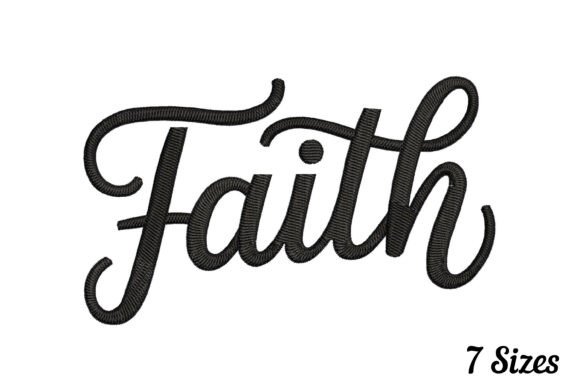
Faith Embroidery: A Timeless Brand Asset for Small Business Merch
First Impression: Elegant Simplicity Meets Spiritual Authenticity
As an embroidery designer who’s digitized and stitched thousands of commercial projects—from café aprons to boutique tote bags—my first read on Faith Embroidery is immediate and positive: it promises elegance without excess. The phrase “Simple Faith Elegant and timeless” tells me this isn’t a decorative motif loaded with florals or ornate script—it’s a refined, intentional machine embroidery design built for clarity and quiet confidence. For small business owners choosing branded patches or chest logos, that balance matters. It reads as warm but professional, spiritual but inclusive, handmade but polished. Whether you run a floral studio, a pet wellness brand, or a local bakery with soul-led values, Faith Embroidery lands as sincere—not preachy—and versatile—not generic.
Real-World Performance Across Business Touchpoints
In practice, Faith Embroidery shines where subtlety and symbolism intersect. On staff aprons? It adds dignity without distraction—ideal for baristas, florists, or craft workshop instructors who want their uniforms to reflect care and consistency. As an embroidered patch sewn onto tote bags or denim jackets, it becomes a quiet signature—recognizable at a glance, memorable after repeated wear. For cap embroidery, its clean lines hold up well on curved fronts when digitized with proper underlay and reduced stitch density. And on custom apparel like unisex tees or work shirts, it functions beautifully as a left-chest accent—small enough to avoid overwhelming the garment, strong enough to anchor your brand identity.
Where it truly excels is in boutique merchandise and handmade product presentation. Think: a linen tea towel with a single Faith Embroidery motif near the hem; a ceramic mug sleeve with the design subtly stitched along the seam; or a gift box tag transformed into a keepsake with a miniature embroidered patch. Because it’s described as “timeless,” it avoids trend-driven fatigue—meaning your Etsy shop, local market stall, or creative studio can use it across seasons without visual rebranding.
Smart Placement: Where to Use It—and Where to Pause
Like any strong embroidery file, Faith Embroidery rewards thoughtful application. It performs best on stable, medium-weight fabrics—cotton twill, canvas, structured denim, and midweight linen all support its clean outlines and balanced fill areas. But caution is warranted on highly textured fabric (like bouclé or heavy burlap), where fine details may blur, or on dark uniforms with low-contrast thread colors—always test thread color contrast before bulk production.
Small patch sizes (under 2 inches wide) demand special attention. While the design is labeled “simple,” verify that key elements—especially letterforms or delicate connectors—remain legible at scale. Cap fronts and curved surfaces benefit from a slight simplification of inner contours during digitizing, so confirm whether your embroidery software or digitizer can adjust spacing and pull compensation without distorting intent. Also note: if the original machine embroidery design includes dense satin-stitched borders or tight fill angles, stitch density may increase wash-and-wear stress on lightweight garments—opt for lighter fill patterns or open-stitch alternatives when embroidering high-use items like staff aprons or reusable totes.
Brand Identity & Customer Connection—Beyond the Stitch
Faith Embroidery doesn’t just decorate—it communicates. In a crowded marketplace, customers notice consistency, craftsmanship, and intention. When used across your apron embroidery, tote bag design, and packaging accents, it builds visual rhythm that reinforces trust. That sense of cohesion tells customers: *This business pays attention—not just to product, but to presence.* For faith-aligned brands (in Religion or wellness-adjacent spaces), it signals alignment without overt proselytizing—making it accessible to broader audiences while resonating deeply with core communities.
It also elevates perceived value. A hand-finished embroidered patch feels more substantial than a printed logo—especially on premium handmade products. Buyers engage longer, share more, and remember better when tactile detail supports your story. That’s why Faith Embroidery works powerfully for Etsy sellers and craft-based small businesses: it bridges digital embroidery file convenience with artisanal authenticity.
Practical Designer Notes for Commercial Use
Before launching Faith Embroidery into production, here’s what I always do—and recommend you do too:
- Test in black and white first. Monochrome reveals spacing issues, overlapping elements, and unintended texture that color can mask.
- Check minimum viable size. Resize the embroidery file to your smallest intended patch or cap application—then zoom in. Are strokes clear? Is kerning readable?
- Review thread color contrast on your target fabric. A light gold thread may vanish on cream canvas; navy on charcoal needs extra density to read.
- Inspect spacing and underlay. Tight lettering or narrow stems need stabilizer-friendly underlay to prevent puckering—especially on stretchy or lightweight materials.
- Confirm hoop size compatibility. Does the design fit comfortably within your standard hoops? Oversized files risk misalignment on multi-position machines.
- Test on real fabric—not just tear-away stabilizer mockups. Fabric texture, drape, and tension change everything.
- Create a printable mockup for client approval. Show how Faith Embroidery looks on actual garment photos—not blank templates—to align expectations early.
- Compare it beside other design assets. Does it harmonize with your existing logo, typography, and brand palette—or does it compete?
- Verify commercial licensing. Since this is a digital embroidery file intended for small business merch and branded patch use, confirm it permits commercial embroidery and resale of finished product—don’t assume.
Finally: don’t skip the stabilizer step. Even elegant designs need structural support. Choose cutaway for knits, tear-away for stable wovens, and fusible + tear-away for lightweight linens. Your finished product depends on it.
Final Thought: A Design That Serves Your Business—Not Just Your Aesthetic
Faith Embroidery succeeds because it’s designed for doing—not just displaying. It fits naturally into workflows for embroidery shops digitizing for clients, Etsy sellers scaling handmade product lines, and small businesses building cohesive merch systems. It respects the limits of thread, fabric, and function—while still carrying meaning. When your goal is to strengthen brand identity through custom apparel, apron embroidery, or thoughtfully stitched gifts, this machine embroidery design delivers quiet authority. Just remember: the most elegant stitch is the one that works—reliably, repeatedly, and right for your customers.