Funny Cow Embroidery Design Embroidery
A Playful Yet Professional Farm Animal Design for Small Business Branding
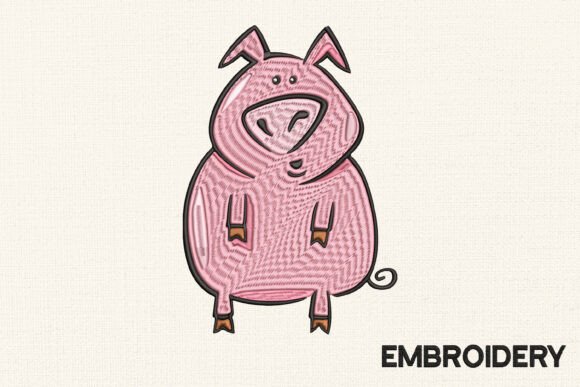
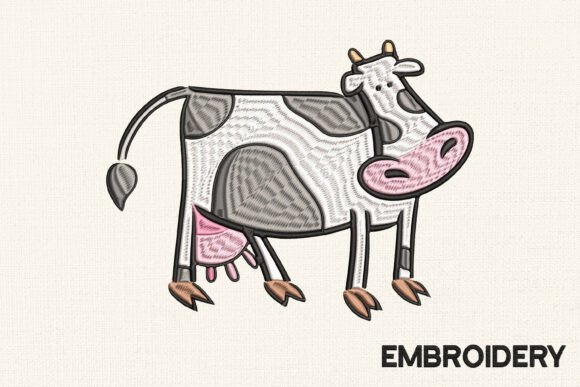
As an embroidery designer who’s developed hundreds of commercial designs for cafés, boutiques, bakeries, and handmade brands, my first impression of Funny Cow Embroidery Design Embroidery is immediate: it strikes a rare balance—whimsical enough to spark smiles, clean enough to hold its own on premium merchandise. The title signals approachability; the “Farm Animals” category hints at rustic charm or agritourism appeal—but this isn’t just decorative. It’s built for business use: as an embroidered patch on staff aprons, a chest logo on custom apparel, or a signature mark on tote bags handed out at farmers’ markets.
Real-World Performance Across Small Business Merch Categories
In practice, Funny Cow Embroidery Design Embroidery shines where personality meets professionalism. For a local creamery or flower farm, it works beautifully as a 2.5-inch embroidered patch sewn onto denim aprons—its friendly silhouette reads clearly from across a market stall. On caps? Yes—if digitized with balanced stitch density and clean underlay, it holds up well on curved fronts without distortion. As a sleeve detail on unisex work shirts, it adds brand warmth without overwhelming the garment. And for Etsy sellers packaging handmade soaps or candles, a small version stitched onto twill tags or cotton drawstring bags elevates perceived value instantly.
Tote bag design is another standout use. Unlike overly detailed animal motifs that blur at scale, Funny Cow Embroidery Design Embroidery relies on confident outlines and expressive simplicity—making it highly legible even at 4–5 inches wide. On tea towels or kitchen linens (as noted in the product description), it reinforces a cohesive, handmade product line—ideal for boutique home goods brands or craft studios launching branded collections.
Where to Use It Thoughtfully—Not Everywhere
That said, not every application is equally effective. Avoid placing Funny Cow Embroidery Design Embroidery on high-curve surfaces like baseball cap brims or tiny baby onesie pockets unless you’ve confirmed the file scales cleanly below 1.75 inches. Overly dense stitching—common in poorly optimized machine embroidery designs—can cause puckering on lightweight cotton or textured linen. If the original embroidery file includes fine internal details (like eyelashes or grass lines), those may vanish or bleed on dark uniforms or terry cloth towels. Always test on your actual fabric: thread colors behave differently on navy twill versus oatmeal canvas, and contrast matters for customer trust and readability.
Also note: while the description lists broad uses (“kitchens, towels, tablecloths”), remember that frequent washing impacts longevity. For café aprons or bakery uniforms, prioritize stabilizer selection—cutaway for heavy wear, tear-away for lighter items—and confirm the design’s hoop size fits your production workflow before bulk digitizing.
How It Shapes Brand Identity and Customer Connection
Small businesses don’t just sell products—they sell feeling. A well-placed Funny Cow Embroidery Design Embroidery tells customers, “We’re grounded, genuine, and don’t take ourselves too seriously.” That builds recognition faster than generic fonts or stock icons. When repeated across staff uniforms, packaging accents, and event merch, it creates visual consistency that strengthens recall—especially for local, community-focused brands like pet-friendly bakeries or florists sourcing from nearby farms.
It also supports perceived craftsmanship. Unlike flat prints, an embroidered patch signals investment in quality. Customers associate that care with higher product value—even for $12 tote bags or $8 reusable napkins. For handmade brands, it reinforces authenticity: no algorithmic polish, just warm, tactile identity. And for Etsy sellers, using Funny Cow Embroidery Design Embroidery across listings (via printable mockups) builds cohesive shop aesthetics that boost buyer engagement and repeat visits.
Practical Designer Notes Before You Stitch
Before committing to production, run these checks:
- Test in black and white first—to assess contrast, spacing, and silhouette clarity without color distraction.
- Verify small-patch viability: shrink the design to 1.5" and check if key features (e.g., ears, smile) remain distinct—not muddy or fused.
- Review thread color contrast against your base fabric. Light threads on light fabric often lack impact; consider tone-on-tone for subtlety or bold opposites for visibility.
- Inspect spacing and underlay: tight corners or overlapping elements can cause thread breaks or uneven coverage—especially on textured fabric.
- Confirm hoop size compatibility with your embroidery machines and typical garment placements (e.g., left-chest area rarely exceeds 4"x4").
- Always test on real fabric, with correct stabilizer—no simulation replaces physical feedback on drape, tension, and wash durability.
- Create a client-approved mockup before stitching live orders. A printable mockup helps align expectations and avoids costly rework.
- Compare beside existing design assets: does it harmonize with your logo, typography, and other embroidery files—or clash tonally?
- Confirm commercial licensing. Since this is a digital embroidery file intended for small business merch, ensure usage rights cover resale, promotional distribution, and branded product labeling.
Finally, revisit the description: “You can embroider this design on clothes, baby’s onesies, home decor, t-shirts, tablecloths, kitchens, towels, and more.” That versatility is valuable—but only if matched with intentional execution. Ask yourself: does Funny Cow Embroidery Design Embroidery serve your brand’s voice, not just fill space? Does it reflect the care your customers expect? When used with purpose—not just pattern—it becomes more than decoration. It becomes part of your story.