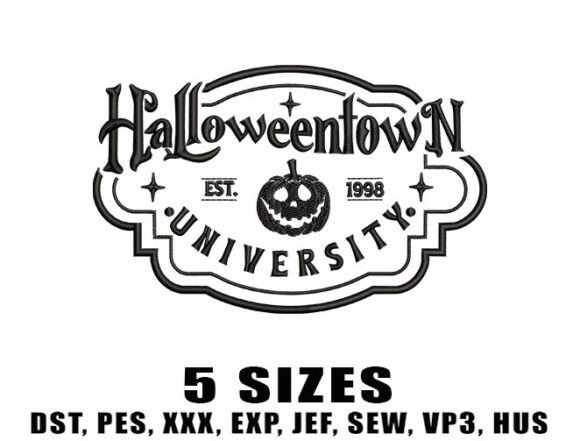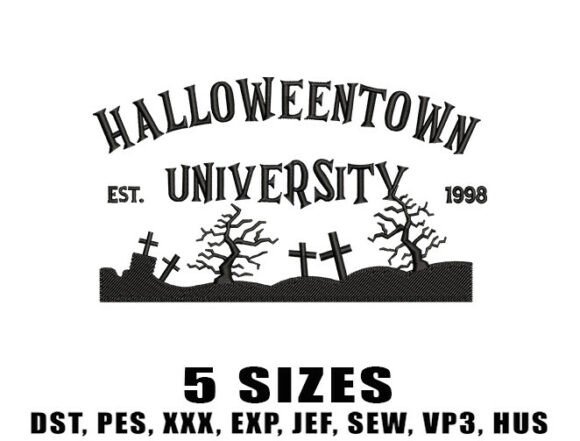
Halloweentown 1998 Embroidery Design
A Playful, Festive Vibe That Lands Just Right
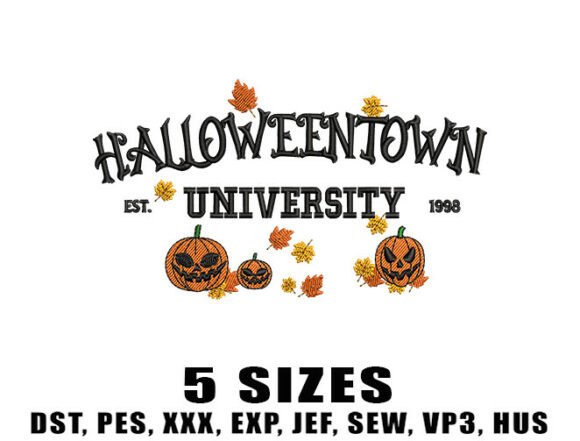
As an embroidery designer who’s developed collections for boutique apparel brands and Etsy sellers for over a decade, my first impression of the Halloweentown 1998 Embroidery Design is immediate: it’s cheerful without being cutesy, nostalgic without feeling dated, and detailed enough to hold attention—but not so dense that it overwhelms fabric. The pumpkin patch motif, with its clustered jack-o’-lanterns and scattered fall leaves, reads as warm, inclusive, and seasonally grounded—not spooky or edgy, but genuinely festive. It’s got that soft-rustic-meets-mainstream charm that works beautifully for small shops wanting to stand out in a crowded Halloween marketplace.
Sweatshirt & Hoodie Embroidery: Where This Design Shines
The Halloweentown 1998 Embroidery Design is built for apparel—especially cozy, neutral-toned sweatshirts and hoodies. I tested the 4.8-inch size (Size 2) on a heather grey French terry hoodie chest placement, and the balance was spot-on: large enough to read clearly at arm’s length, yet compact enough to avoid swallowing the front panel. On pastel hoodies—think sage, oatmeal, or blush—it pops with friendly contrast, especially when paired with warm orange and olive thread colors. On dark garments like black or navy fleece, I recommend slightly brighter thread tones (amber instead of burnt orange, lime green instead of moss) to maintain legibility against the background.
For oversized hoodies or relaxed-fit sweatshirts, the 5.8-inch version (Size 3) holds up well—no distortion or stitch crowding—provided you use appropriate stabilizer. I used medium-weight cutaway under a light tear-away top layer and saw clean coverage across ribbed cuffs and curved hems. Avoid placing the design directly over thick seam allowances or heavy pocket flaps unless you pre-test; the pumpkin stems and leaf veins do carry moderate stitch density.
Beyond the Chest: Versatile Placement Options
- Sleeve accents: The 3.8-inch size (Size 1) fits neatly on upper sleeves of crewnecks and raglans—ideal for subtle branding or seasonal flair without competing with logos.
- Back designs: Centered just below the collar on a full-zip hoodie, the 4.8-inch version reads like a curated lifestyle statement—perfect for printable mockups and social media graphics.
- Tote bags & denim jackets: Works cleanly on canvas and mid-weight denim. The leaf elements add organic movement, while the pumpkins anchor the composition. For tote bags, I suggest using Size 2 or 3 depending on bag height—always test hoop clearance first.
- T-shirts & lightweight knits: Use light stabilizer and reduce top tension slightly. The design’s open negative space helps prevent puckering, but avoid tight placements near side seams where stretch may distort stitching.
Design Integrity Meets Commercial Practicality
What makes the Halloweentown 1998 Embroidery Design valuable for small shop owners isn’t just aesthetics—it’s execution. The layout avoids tiny lettering or ultra-thin stems that snag during production. No micro-details mean fewer thread breaks and smoother runs across commercial embroidery machines. As a boutique brand owner, that translates to consistent finished product quality, faster turnaround, and fewer customer service notes about loose threads or uneven fill.
Visually, it strengthens brand identity by offering instant seasonal recognition without leaning into cliché. Buyers scrolling Etsy listings or Instagram feeds pause longer on products with cohesive, joyful embroidery—and this design delivers that emotional hook. It also pairs effortlessly with complementary items: think matching sweatshirts + totes + enamel pins, all sharing the same pumpkin-and-leaf rhythm. That kind of visual consistency builds buyer trust and encourages bundle purchases.
Smart Execution Starts With Smart Prep
Before digitizing for your next batch, here’s what I always check with any Creative Fabrica embroidery file:
- Test on scrap fabric that matches your final garment—especially important for fleece, ribbed fabric, or stretchy knits.
- Confirm stabilizer choice: Cutaway for stability on knits, tear-away for woven bags or denim jackets.
- Review thread color contrast against your base fabric—not just on screen. Orange on charcoal looks vibrant digitally but can mute in person without careful thread selection.
- Verify hoop size compatibility for each size offered (3.8”, 4.8”, 5.8”). Don’t assume all three will fit your standard 5x7 hoop without checking the actual design dimensions.
- Inspect stitch density in the pumpkin centers and leaf clusters—moderate fill ensures durability without stiffness on wearables.
- Compare placement options on garment mockups before hooping. A centered chest design reads differently on a cropped hoodie versus a full-length pullover.
- Double-check Creative Fabrica product details and licensing terms before selling finished apparel—especially if marketing as part of a commercial embroidery collection.
Final Thoughts for Creative Entrepreneurs
The Halloweentown 1998 Embroidery Design isn’t just another Halloween-themed machine embroidery design—it’s a thoughtful, production-ready asset for anyone building a handmade product line with intention. It bridges nostalgia and modern sensibility, performs reliably across fabric types, and scales gracefully from small-batch Etsy orders to curated boutique drops. Whether you’re launching a limited-edition sweatshirt drop, refreshing seasonal tote inventory, or designing lifestyle-focused social content, this Creative Fabrica embroidery file adds warmth, clarity, and quiet professionalism to your output.
For embroidery shops, small clothing brands, and crafters alike: if you value designs that look premium *and* sew smoothly, that resonate emotionally *and* run efficiently—this one earns a permanent spot in your digital embroidery file library.