Musical Clarinet with Notes Embroidery Design
First Impressions: A Playful, Polished Music Motif
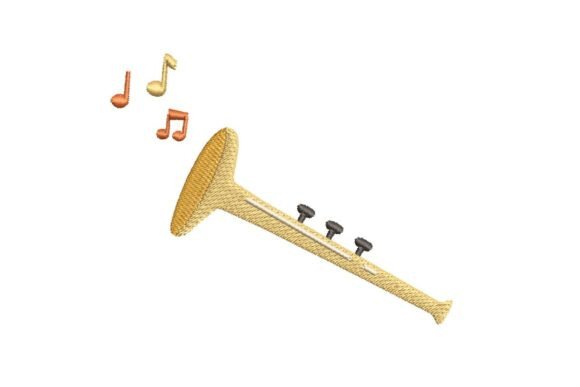
When I opened the Musical Clarinet with Notes Embroidery Design, my immediate thought wasn’t “cute” or “decorative”—it was “this has presence.” The clarinet is angled dynamically, as if mid-performance, and the subtle musical notes curling from its bell give it motion and personality. It’s not overly literal or technical—no wood grain or hyper-detailed keywork—but that’s a strength. The stylized golden-yellow or beige body reads rich and warm on light fabric, while the soft grey keys add quiet contrast without competing. It feels intentional, not generic—a real machine embroidery design made for people who care how things look when stitched, not just how they render on screen.
A Real-World Test: Stitching It onto a Linen-Cotton Tote Bag
Last week, I used the Musical Clarinet with Notes Embroidery Design on a natural linen-cotton tote for a local music teacher’s studio gift set. I chose a medium-weight cutaway stabilizer, matched thread to the design’s warm tone (a creamy ecru for the body, charcoal grey for keys), and hooped carefully to avoid puckering on the textured weave. The result? Clean satin stitch definition on the clarinet’s curves, balanced fill stitch density in the bell, and no floaters or skipped stitches—even around the slender note tails. Customers noticed it immediately. One said, “It doesn’t look like embroidery—it looks like part of the bag.” That’s the handmade product magic we aim for: confidence, clarity, and charm without clutter.
Where This Design Shines (and Where It Asks for Thought)
The Musical Clarinet with Notes Embroidery Design excels on structured, stable surfaces: sweatshirt embroidery (especially on crewnecks or sleeves), embroidered patch backings, aprons, pillow covers, and tea towels. Its moderate scale and open negative space make it forgiving on slightly uneven fabric—like brushed cotton or midweight twill. It also translates beautifully to baby embroidery: think onesies or burp cloths where softness and recognition matter more than fine detail. For Etsy sellers and small shop products, it adds instant thematic cohesion to a music-themed boutique line—no extra branding needed.
That said, proceed with care on stretchy fabrics (like jersey knits) without proper stabilization—the angled shape can distort if tension isn’t dialed in. On dark fabric, test thread contrast first; the golden-yellow tone may mute unless you switch to a brighter gold or metallic thread. And while it works well on caps, avoid placing it too close to the curved bill seam—those delicate note curves need flat real estate to stitch cleanly. Tiny hoop sizes (< 4”) will compress the design’s rhythm; this isn’t a micro-detail piece—it needs breathing room to land.
Design Judgment: Beyond Aesthetics
What makes the Musical Clarinet with Notes Embroidery Design commercially smart isn’t just how it looks—it’s how it supports your process and perception. Its clean lines reduce thread breaks. Its moderate stitch density means faster run times and less wear on machines during batch production. Visually, it reads clearly at arm’s length (great for craft fair displays) but rewards closer inspection—the subtle texture in the body, the gentle curve of each key. That duality builds customer trust: it feels considered, not templated.
For personalized gifts—say, a graduation present for a band student—it elevates the sentiment without being cutesy or juvenile. For holiday embroidery or wedding gifts (think: a clarinet motif on a hand-stitched napkin set for a music-loving couple), it adds quiet sophistication. And because it avoids text or dated trends, it stays relevant across seasons and buyer demographics—unlike some overly themed designs that age quickly.
Practical Designer Notes Before You Stitch
- Always test first—run the Musical Clarinet with Notes Embroidery Design on scrap fabric matching your final project’s weight and stretch.
- Check thread color contrast on both light and dark backgrounds—not just digitally, but stitched. What looks warm on screen can read muddy on oatmeal linen.
- Review stitch density before scaling. If you enlarge it significantly for a blanket or wall hanging, confirm fill areas won’t become heavy or stiff.
- Confirm hoop size compatibility. Its natural layout fits comfortably in a 5x7 hoop, but verify file dimensions before loading into your machine.
- Inspect small details—especially the tips of the musical notes and the spacing between keys. These are common trouble spots on lower-resolution files.
- Test black-and-white mockups to gauge silhouette strength. This design holds up well, but always verify.
- Use appropriate stabilizer: cutaway for knits and towels, tear-away for stable wovens like cotton poplin or canvas.
- Clarify licensing before selling finished items or listing the digital embroidery file—especially if you’re an Etsy seller or digital product creator.
Final Thought: A Design That Earns Its Place
The Musical Clarinet with Notes Embroidery Design isn’t flashy—but it’s reliable, expressive, and quietly versatile. It works for custom apparel, boutique branding, holiday embroidery, and heartfelt personalized gifts alike. It respects the craft: no over-engineered fills, no fragile elements, no visual noise. As a designer and embroidery product reviewer, I don’t reach for this design when I want “wow.” I reach for it when I want trust—in the stitch, in the story, and in the finished product. That’s the kind of design assets that build repeat customers, not one-off sales.