Nautical Embroidery Design
A Practical Review for Small Business Merch & Branded Patches
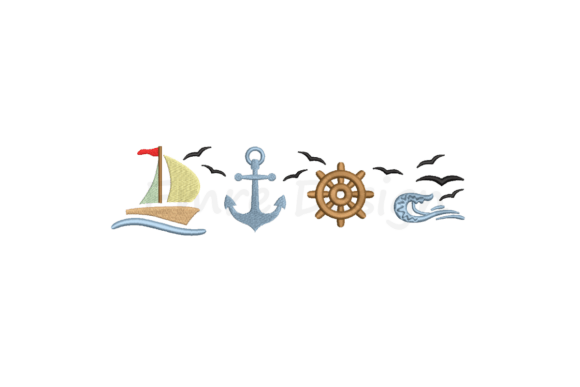
As an embroidery designer who’s digitized over 2,000 commercial projects—from café aprons to boutique tote bags—I approach every machine embroidery design with two questions: “Does it translate professionally at scale?” and “Will it hold up in real-world small business use?” When I first saw the Nautical Embroidery Design, its title and description—“Spruce up your fabrics with this charming embroidery design… fun and whimsical touch”—immediately signaled a lighthearted, coastal personality. It doesn’t read as corporate or nautical-military; instead, it feels friendly, handmade, and intentionally approachable—ideal for beach-adjacent brands like coastal bakeries, florists with seaside charm, pet boutiques named after tide pools, or artisan studios selling hand-thrown ceramics with ocean motifs.
Where Nautical Embroidery Design Shines in Business Applications
This digital embroidery file excels where warmth and recognizability matter more than rigid formality. On staff aprons for a seaside coffee roaster? Yes—it adds visual storytelling without overwhelming the fabric. As an embroidered patch sewn onto canvas tote bags for a local gift shop? Absolutely. The “whimsical” quality translates into approachability, helping customers associate your brand with ease, authenticity, and place-based charm. For cap embroidery on structured cotton twill, it works best on the front panel when scaled to 3–3.5 inches wide—clean lines and balanced negative space prevent distortion on curved surfaces. On custom apparel like short-sleeve tees for a surf school or linen shirts for a boutique hotel, it serves beautifully as a subtle sleeve detail or chest accent—not shouting, but inviting closer attention.
For Etsy sellers and handmade product creators, Nautical Embroidery Design is a smart asset: it pairs seamlessly with natural fibers (linen, organic cotton, unbleached canvas) and complements minimalist packaging accents—think stitched labels on soap wraps or embroidered tags on ceramic mugs. As part of a broader set of design assets, it supports visual consistency across product categories: same motif appears on aprons, tote bags, and staff caps, reinforcing brand identity without repetition fatigue. That consistency builds customer trust—shoppers begin to recognize your aesthetic intuitively, associating that nautical charm with quality, care, and local character.
Use With Intention: Where Caution Applies
While versatile, Nautical Embroidery Design isn’t universally scalable. Its “charming” and “whimsical” nature suggests moderate detail—not ultra-fine linework, but likely soft curves and open shapes. That means it may not resolve cleanly below 2 inches, especially as an embroidered patch on a child-sized cap or tiny product label. If your small business merch includes miniature items (e.g., embroidered keychains or mini tote tags), test the design at 1.75 inches first. Likewise, avoid placing it directly over high-texture fabrics like heavy terry cloth towels or bouclé knit without extra stabilizer—stitch density can shift unpredictably on uneven surfaces.
Dark uniforms—navy chef coats, charcoal work shirts—demand thoughtful thread color selection. Since the product description doesn’t specify included thread colors, always review contrast before production: light blues or creams may disappear on deep navy unless paired with tone-on-tone metallics or high-luster rayon. Also, confirm hoop size compatibility early. A design built for a 4x4 hoop won’t scale cleanly to a 5x7 without re-digitizing—especially if outlines or fill areas rely on precise tension balance. And remember: frequent washing impacts longevity. If this embroidery file uses dense satin stitching for borders, consider simplifying those elements for high-use items like restaurant aprons or reusable grocery totes.
Strengthening Brand Identity Through Thoughtful Execution
What makes Nautical Embroidery Design valuable isn’t just its coastal theme—it’s how it elevates perceived product value. A well-executed embroidered patch signals investment, craftsmanship, and intention. Customers don’t just see “a logo”; they sense care. That perception directly supports pricing confidence—handmade brands can justify premium positioning when their merch carries tactile distinction. For small businesses relying on word-of-mouth and Instagram visibility, this design also boosts buyer engagement: it photographs well on natural light, reads clearly in printable mockups, and encourages shares (“Love my new café apron!”). Crucially, it avoids cliché—no overused anchors or generic compass roses—so it feels curated, not stock.
Pro Designer Notes Before You Stitch
- Test in black and white first. Simulate how thread contrast reads on your target fabric—especially for dark uniforms or textured linens.
- Check minimum viable size. Resize the embroidery file to 2 inches and inspect stitch integrity—look for gaps in outlines or pooling in fills.
- Review thread color contrast against your actual garment or patch substrate—not just on screen.
- Inspect spacing between elements. Tight loops or overlapping shapes may cause nesting or thread breaks on low-tension machines.
- Confirm hoop size and format compatibility with your embroidery software and machine model.
- Test on real fabric using your intended stabilizer combo—cut-away for stretch knits, tear-away for stable wovens, fusible for lightweight linens.
- Create a physical mockup before client approval—digital previews miss texture, drape, and sheen.
- Compare beside existing design assets—does it harmonize with your typography, color palette, and other icons?
- Verify commercial licensing before deploying on paid merchandise. Not all digital embroidery files permit resale or branded patch production.
Ultimately, Nautical Embroidery Design isn’t just decoration—it’s a quiet ambassador for your brand. When applied with intention, it turns everyday items—tote bags, caps, aprons—into memorable touchpoints. For small businesses rooted in place, personality, and craft, that’s not whimsy. It’s strategy.