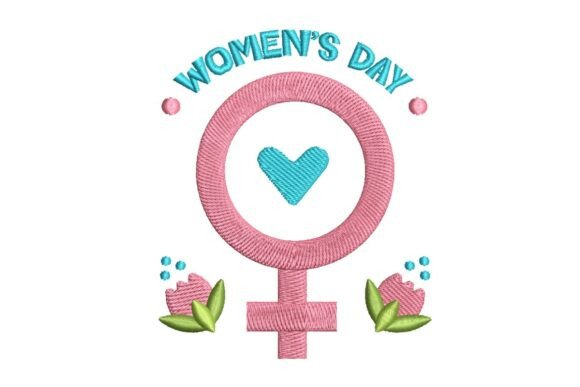
WOMEN’S DAY Female Symbol with Heart & Flowers
A Practical Embroidery Designer’s Review for Small Business Use
As an embroidery designer who’s developed hundreds of commercial designs for cafes, boutiques, florists, bakeries, and handmade brands, I approached the WOMEN’S DAY Female Symbol with Heart and Flowers Embroidery Design with a very specific question: Does this work as functional brand identity—not just seasonal decoration? The answer is yes—but with thoughtful application. This isn’t just a holiday motif; it’s a versatile machine embroidery design that can elevate small business merch when used intentionally.
First Impression: Friendly, Modern, and Intentionally Feminine
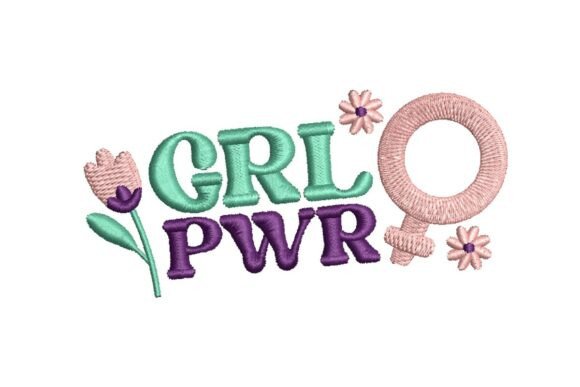
From the title and description alone—“vibrant,” “textured pink,” “bright blue heart,” “flowers”—the WOMEN’S DAY Female Symbol with Heart and Flowers Embroidery Design reads as warm, inclusive, and confidently contemporary. It avoids cliché while honoring tradition: the female symbol anchors it in clarity and recognition, the heart adds emotional resonance, and the floral accents soften formality without veering into whimsy. For a small business owner choosing between “cute,” “corporate,” or “craft-focused” branding, this lands squarely in the sweet spot—professional yet personable, modern but not sterile.
Where It Shines in Real Business Applications
- Embroidered patches: Ideal for iron-on or sew-on use on tote bags, aprons, or shop jackets. Its balanced proportions hold up well at 2.5"–3.5" width—common for boutique merchandise and staff uniforms.
- Apron embroidery: Positioned above the pocket or centered on the chest, the design communicates care and celebration—perfect for florists, bakeries, or wellness studios honoring Women’s Day events.
- Cap embroidery: Works cleanly on structured front panels (e.g., unstructured cotton caps), especially when digitized with moderate stitch density. Avoid ultra-low-profile caps with deep curvature unless tested first.
- Tote bag design: Scales beautifully on canvas or natural cotton totes—ideal for customer gifts, pop-up shops, or branded giveaways. The textured pink and bright blue thread colors pop against neutral backgrounds.
- Staff uniforms & work shirts: Adds cohesion without overwhelming. Pair it with subtle monogramming or a small business name tag for visual consistency across teams.
- Product packaging accents: As a small embroidered label on reusable pouches, gift boxes, or handmade soap wraps, it reinforces brand values around empowerment and craftsmanship.
Where to Apply Caution—Not Every Surface Is Equal
The WOMEN’S DAY Female Symbol with Heart and Flowers Embroidery Design performs best where fabric stability and visibility align. Avoid using it at under 1.75" wide on curved surfaces like baseball cap crowns or tight sleeve cuffs—it may lose definition in the heart detail or floral outlines. On dark uniforms (navy, charcoal, black), verify thread color contrast: textured pink must be legible, and the bright blue heart shouldn’t fade into shadow. High-stitch-density versions may struggle on loosely woven fabrics (like burlap or thin linen) without proper stabilizer—always test on your actual garment fabric, not just tear-away practice swatches.
How It Strengthens Brand Identity and Customer Trust
For Etsy sellers, craft studios, or local businesses, consistent visual language builds recognition—and trust. When customers see the WOMEN’S DAY Female Symbol with Heart and Flowers Embroidery Design repeated across aprons, tote bags, and staff caps, it signals intentionality. It tells them your brand celebrates women meaningfully—not as marketing afterthought, but as core identity. That perception increases perceived product value and encourages repeat engagement, especially among mission-aligned buyers. Importantly, its clean structure supports visual consistency: it pairs naturally with serif or rounded sans-serif fonts in printable mockups, and holds its own beside other design assets like logos or pattern repeats.
Essential Embroidery Designer Notes Before Production
- Test in black and white first. Confirm readability and balance without color bias—especially critical for multi-thread jobs where hue shifts affect perception.
- Verify small-patch viability. Resize the digital embroidery file to your target patch dimensions and check for lost detail in the heart center and petal edges.
- Review thread color contrast. Textured pink + bright blue works on light-to-mid fabrics—but request PMS or thread brand references from the seller if matching existing brand colors.
- Inspect spacing and underlay. Tight curves around the symbol’s circle and heart need clean underlay to prevent puckering on stretch or knit fabrics.
- Confirm hoop size compatibility. Ensure your standard hoops (e.g., 4x4", 5x7") accommodate the design without re-hooping mid-stitch—a key efficiency factor for commercial embroidery shops.
- Test on real fabric + stabilizer combo. A denim apron needs different backing than a lightweight cotton tote. Don’t assume digitization translates universally.
- Create a client-approved mockup. Use the design in a printable mockup alongside your brand palette—this prevents revisions post-embroidery.
- Compare beside existing design assets. Does it harmonize with your logo, patterns, or typography? Or does it visually compete?
- Confirm commercial licensing. Since this falls under Holidays and Embroidery categories, ensure the digital embroidery file includes rights for resale, promotional use, and small business merch—not just personal crafting.
Ultimately, the WOMEN’S DAY Female Symbol with Heart and Flowers Embroidery Design isn’t just a timely motif—it’s a smart, scalable asset for small businesses building authentic, values-driven brand identity. Used with intention, it transforms everyday items—aprons, caps, totes—into quiet statements of inclusion and pride. For embroidery shops and apparel decorators, it’s a reliable, client-friendly design that balances emotional resonance with technical practicality. Just remember: great embroidery starts long before the needle moves—it begins with review, testing, and respect for how the finished product lives in the real world.