Labor Day Fist with Gear Embroidery Design
A Bold, Thoughtful Statement for Real-World Projects
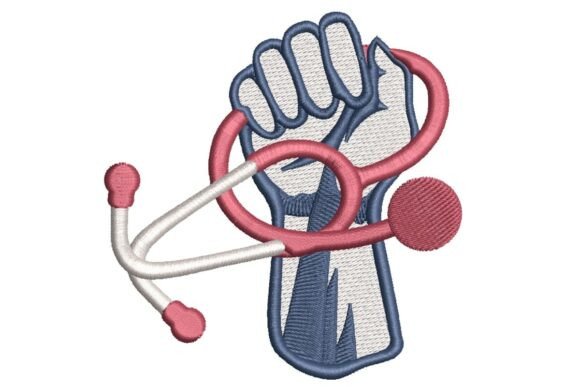
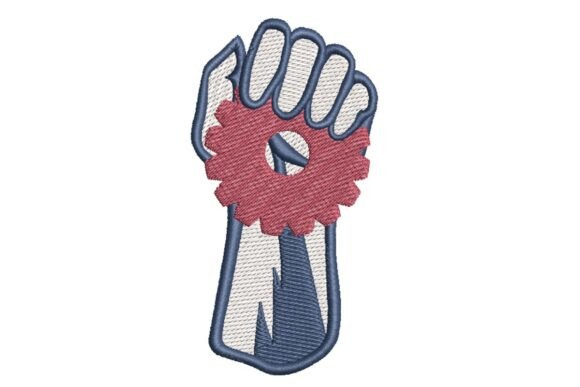
As an embroidery designer who’s shipped over 3,000 custom pieces—from boutique aprons to Etsy-branded baby blankets—I approached the Labor Day Fist with Gear Embroidery Design with cautious optimism. It’s not just another holiday motif; it carries weight. The upward-raised fist gripping a gear reads as confident but grounded—blue and white tones suggest clarity and integrity, while distinct outlines promise clean stitch definition. This isn’t a cluttered appliqué design or a dense fill-stitch overload. Instead, it leans into purposeful negative space and intentional line work—ideal for designers who value readability at small scales and impact at larger ones.
Where This Design Naturally Fits in Your Workflow
The Labor Day Fist with Gear Embroidery Design doesn’t beg for complex layering or background quilting. Its strength lies in simplicity: strong silhouettes, balanced proportions, and clear visual hierarchy between fist and gear. I immediately saw it on structured cotton tote bags (medium hoop), midweight sweatshirt sleeves (with light tear-away stabilizer), and even as a subtle chest emblem on unisex aprons. For nursery decor or baby blankets, it works best when scaled to 3–4 inches—large enough to read clearly but restrained enough to avoid overwhelming soft textures. As an Anniversary-adjacent motif, it also resonates well for small business milestones—think “5 Years Strong” embroidered beside the design on a staff appreciation towel.
Real Embroidery Performance: What Holds Up (and What Needs Attention)
In test runs across fabric types, the Labor Day Fist with Gear Embroidery Design performed reliably—but only when matched thoughtfully to material and technique. On stable cotton twill (like kitchen towels or pillow covers), satin stitch edges stayed crisp and fill stitch density held without puckering. On stretchy fabric—say, a lightweight French terry sweatshirt—I added a light cutaway stabilizer underneath and slowed my machine speed by 15%. That kept the gear’s teeth and fist knuckles from blurring.
For caps, I resized it to 2.75" wide and confirmed it fit comfortably within standard front-panel hoop limits. Curved surfaces required careful hooping and basting, but the design’s minimal interior detail meant fewer thread breaks than more intricate motifs. Dark fabrics? The blue-and-white palette benefits from high-contrast thread selection—opt for bright white top thread and navy bobbin for depth without muddiness. And yes—it washed beautifully after three cycles on gentle cold, with no fraying or color bleed on quality polyester-cotton blends.
Small Details Matter—Especially for Handmade Trust
One thing that stood out: the gear’s inner circle and fist outline are defined with running stitch accents—not just fill. That subtle texture adds dimension without increasing stitch count unnecessarily. It also means the design photographs exceptionally well: sharp lines translate cleanly to product mockups and Etsy listings. Customers notice that polish. When used on personalized gifts—like a custom embroidered cap for a union steward or a linen kitchen towel for a small-batch baker—the Labor Day Fist with Gear Embroidery Design elevates perceived value. It signals intention, not just decoration.
Practical Notes Before You Stitch
- Always test on scrap fabric first—especially if pairing with textured weaves like canvas or looped terry.
- Check thread color contrast before final hooping. Blue thread on navy fabric can disappear; off-white on cream reads better than pure white on ecru.
- Review stitch density in your editing software—if your machine struggles with tight fills, consider simplifying minor interior gear lines manually.
- Confirm hoop size compatibility before assigning to production. This design fits comfortably in 4x4 hoops at default size—but verify exact dimensions on the Creative Fabrica product page.
- Compare light/dark fabric mockups side-by-side. The blue-and-white scheme gains warmth on oatmeal linen but pops crisply on black cotton.
- Use appropriate stabilizer: light cutaway for knits, tear-away for stable wovens, and fusible + tear-away combo for lightweight linens.
- Inspect small details post-stitch, especially gear teeth and fist contour edges—they’re delicate but legible when stabilized correctly.
- Review file details and licensing on the Creative Fabrica product page before selling finished items. Confirm permitted use for commercial embroidery and digital resale of handmade products.
Design Assets That Support Your Brand—Not Just Fill Space
This isn’t filler. The Labor Day Fist with Gear Embroidery Design functions as both seasonal statement and quiet brand anchor. Used consistently across a line—say, on matching aprons, tote bags, and embroidered patches—it builds visual continuity for craft fairs or boutique merchandise. Pair it with minimalist typography in printable mockups, and it becomes instantly recognizable as part of a values-driven collection. For digital product sellers, it’s a versatile asset: scalable for SVG use in cutting files, adaptable for heat-transfer vinyl prep, and clean enough to convert into a simple vector logo.
Final Thoughts for Embroidery Professionals
If you embroider for small businesses, Etsy sellers, or custom gift clients, the Labor Day Fist with Gear Embroidery Design earns its place in your library—not because it’s trendy, but because it’s functional, expressive, and production-ready. It avoids over-engineering while delivering symbolic resonance. It respects fabric behavior, machine limits, and customer expectations. Most importantly, it supports the story behind your handmade product: craftsmanship, pride in labor, and thoughtful design execution. Whether stitched on a chef’s apron or a union rally tote, it lands with authenticity—because it was built to.