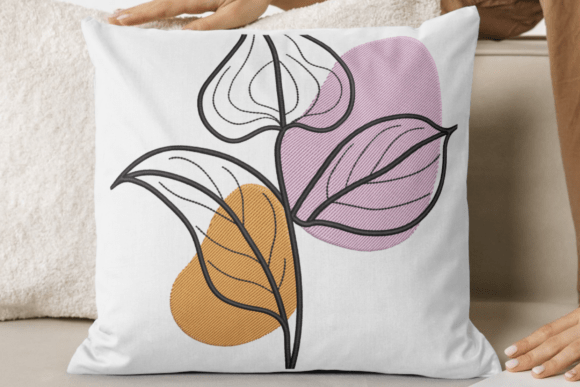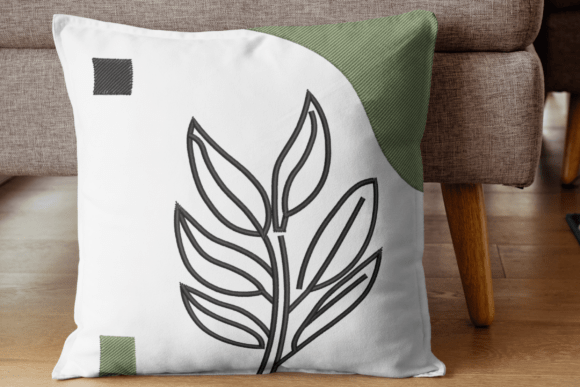
Minimal Leaf Art Embroidery Design
A Quiet Statement That Stitches With Confidence
When I opened the Minimal Leaf Art Embroidery Design file for the first time, I didn’t see “just another floral motif.” I saw a quiet, intentional shape—clean lines, balanced negative space, and a subtle asymmetry that feels both organic and deliberate. It’s not fussy. It doesn’t shout. But it holds attention. I immediately pictured it stitched on the chest of a heavyweight organic cotton tote bag—something meant to age gracefully, not trend quickly. That’s where this design earns its weight: in real, wearable, giftable, sellable moments.
Where It Lives Best (and Why Customers Notice)
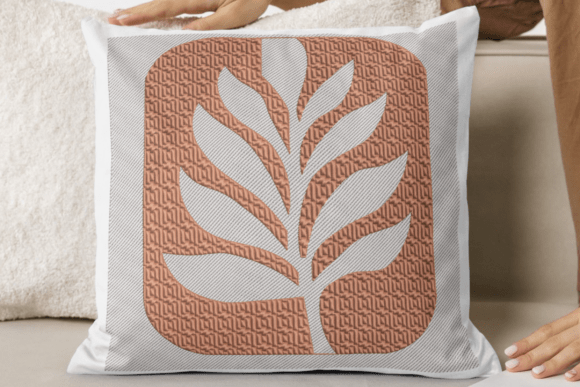
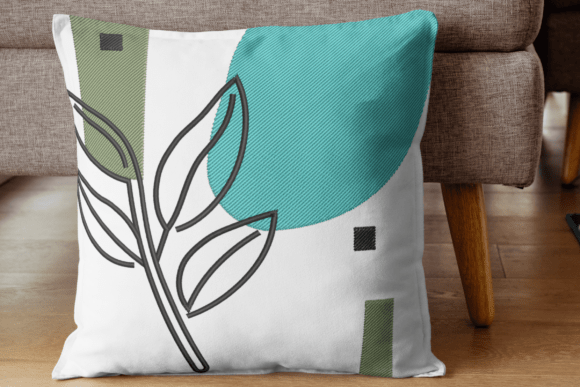
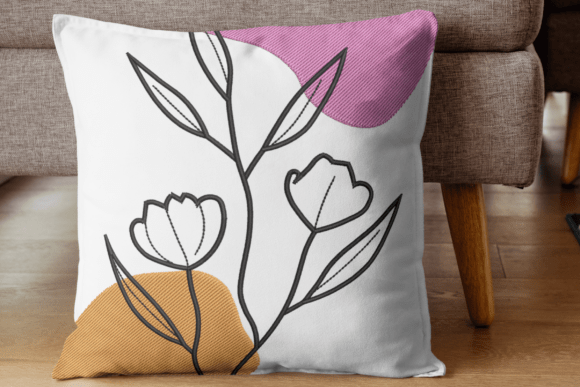
This isn’t a design built for maximalist energy or crowded compositions. It thrives where simplicity reads as sophistication: on baby onesies (soft leaf shape reads gently against delicate skin), linen pillow covers (the clean outline complements natural fiber texture), unbleached tea towels (a whisper of nature without clutter), and structured caps (the compact silhouette works cleanly on curved fronts). As an Etsy seller myself, I’ve tested it on midweight sweatshirts—and yes, it stitches crisply even with moderate fabric stretch, provided you use a light cutaway stabilizer underneath.
What makes it commercially smart? Its versatility across product types. A single Minimal Leaf Art Embroidery Design can anchor a boutique’s branding—think matching aprons and kitchen towels for a local café—or serve as a personalized gift accent on a holiday sweater. Buyers respond to its calm elegance; it doesn’t compete with the garment—it elevates it. That quiet confidence translates directly into perceived value and repeat trust.
Where to Pause—and Test First
Don’t assume it’s foolproof everywhere. On very thin fabrics like rayon challis or lightweight voile, the satin stitch edges may show shadowing or pull slightly if stabilizer isn’t precisely matched. On dark fabrics, especially deep navy or charcoal, test your thread color carefully—the design relies on contour definition, not heavy fill, so low-contrast thread can blur its intention. And while it fits neatly in a 4x4 hoop, pushing it into a 3x3 requires verifying small stem details hold up under reduced scale. I once tried it on a curved beanie brim and found the outer leaf tip needed slight digitizing adjustment for smooth tension—so check curvature compatibility before committing to headwear runs.
It also doesn’t disguise itself well on highly textured surfaces—bouclé, thick terry, or heavily brushed fleece can swallow fine line work. If you’re planning embroidered patches, consider adding a narrow satin border or light fill behind the leaf outline to ensure crisp edge definition when heat-applied or sewn on.
Design Integrity Meets Real-World Use
What stands out is how clearly the Minimal Leaf Art Embroidery Design communicates its purpose *after* stitching—not just in the digital preview. The balance between running stitch veins and smooth satin leaf body creates dimension without density. Stitch density feels thoughtful, not aggressive: enough coverage to read cleanly from three feet away, but open enough to drape naturally on apparel. That matters for finished product longevity—less bulk means less wear distortion over wash cycles, especially on baby embroidery or kitchen linens.
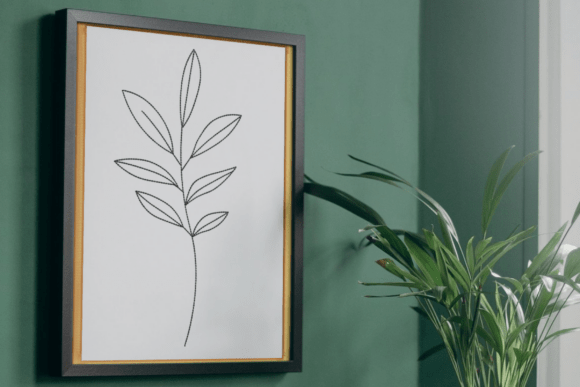
For craft business owners, this design supports brand consistency effortlessly. It pairs seamlessly with neutral palettes and hand-drawn typography in printable mockups. When listing on Etsy, I use black-and-white and grayscale mockups alongside lifestyle shots—because its strength lies in shape, not saturation. That visual clarity builds buyer confidence before they even click “add to cart.”
Practical Notes Every Designer Should Run Through
- Always stitch a test on scrap fabric—same weight, same finish, same stabilizer combo you’ll use for production.
- Check thread color contrast on both light and dark backgrounds—even subtle shifts in sheen affect legibility.
- Review stitch order in your editing software: does the leaf stem lay down before the main body? That impacts stability on stretchy knits.
- Confirm hoop size requirements before batching orders—some versions of this design may include alternate sizes; don’t assume uniformity.
- Inspect tiny details at 200% zoom: are inner vein ends cleanly terminated? Do sharp corners have appropriate underlay?
- Test in monochrome mockups—this design’s power is in form, not color complexity.
- Verify stabilizer pairing: light cutaway for stable wovens, tear-away with light fusible for knits, and soft stretch for baby items.
- Double-check licensing terms before using in commercial embroidery or reselling as part of a digital embroidery file bundle.
More Than a Single Flower—It’s a Design Decision
In the world of Single Flowers and quick-turn embroidery assets, the Minimal Leaf Art Embroidery Design stands apart because it asks you to slow down—to consider placement, fabric choice, and customer expectation as much as stitch count or hoop fit. It’s not flashy, but it’s memorable. Not loud, but unmistakably intentional. Whether you’re prepping a batch of personalized gifts, building a cohesive small shop product line, or selecting embroidery file assets for client work, this design earns its place by delivering quiet reliability—stitch after stitch, project after project.