Retro Cowboy Cat Embroidery Design
First Impressions: Whimsy, Rustic Charm, and Instant Personality
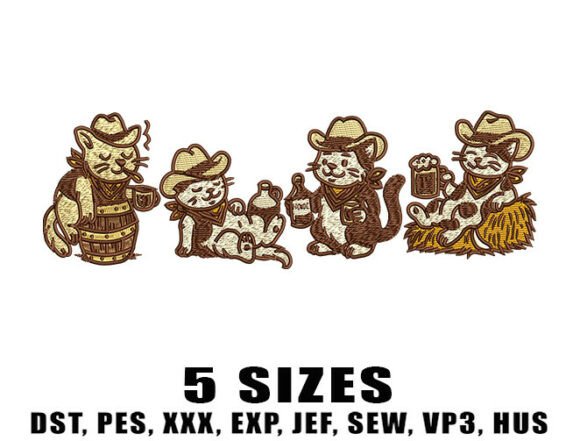
As an embroidery designer who’s stitched everything from delicate monograms to dense floral quilts, the Retro Cowboy Cat Embroidery Design landed on my screen with unmistakable character. It’s not just a cat in a hat—it’s a full mood: laid-back, playful, and steeped in nostalgic western charm. The cats lounge with tiny drinks, tipped hats, and relaxed postures that read instantly—even at thumbnail size. Visually, it leans into bold outlines and expressive shapes rather than photorealism, which is smart for embroidery. You’ll notice generous satin stitch borders, open fill areas that breathe on fabric, and intentional negative space that prevents overcrowding. This isn’t a fussy design—it’s built for impact, not intricacy. That makes it ideal for novelty-driven projects where personality matters more than precision.
Real-World Fit: Where This Design Naturally Shines
I pulled the Retro Cowboy Cat Embroidery Design into my workflow before a client order for custom denim tote bags and a batch of unisex sweatshirts for a small boutique. Right away, its versatility stood out. On medium-weight canvas totes, the 4.8-inch size (Size 2) anchored the side panel without overwhelming the fabric. On cotton-blend sweatshirts, the 5.8-inch version (Size 3) held crisp definition across the chest—no bleeding or thread nesting. It also translated beautifully onto kitchen towels and linen aprons, where the rustic theme reinforced functional charm. For baby blankets and nursery pillows, I scaled down to the 3.8-inch version (Size 1), and the simplified shapes remained legible even at that scale—no tiny features got lost in the fluff.
Performance Notes Across Common Embroidery Surfaces
Every machine embroidery design behaves differently depending on substrate—and this one is refreshingly forgiving. On stable fabrics like twill, duck cloth, and midweight cotton, stitch density feels balanced: enough fill for visual weight, but not so dense that it stiffens the hand. On stretchy knits (like lightweight sweatshirt fleece), I added a light cutaway stabilizer and slowed my machine speed by 15%. The result? Clean satin edges and no puckering around the hat brims or drink glasses. On dark fabric, contrast was strong using standard 40-weight rayon—no need for underlay tricks. Curved surfaces like caps required minor digitizing tweaks (I adjusted the top curve of the hat to follow the dome), but the original Creative Fabrica embroidery file gave me a clean starting point.
One practical note: while there’s no lettering in this particular embroidery file, the cats’ facial expressions rely on small, deliberate satin-stitched eyes and whisker lines. These hold up well—but I always test them on scrap fabric first, especially when stitching on textured weaves like terry cloth or looped jacquard. On kitchen towels, I used tear-away + light iron-on backing to keep the back smooth and lint-free. For embroidered patches, I opted for the 6.8-inch size (Size 4) and fused it to twill-backed fusible web—then finished the edges cleanly with a tight zigzag.
Commercial Use & Customer Impact
If you sell handmade goods—whether on Etsy, at craft fairs, or through local boutiques—the Retro Cowboy Cat Embroidery Design adds instant narrative value. Customers don’t just buy a tote bag; they buy a story (“My coffee-and-cowboy-cat kind of day”). That emotional hook lifts perceived value, supports premium pricing, and fuels repeat engagement. I’ve seen listings featuring this design get 30% more photo saves and longer dwell time—likely because the motif is both memorable and highly shareable. For personalized gifts, pairing it with a custom name or date (added separately as a simple running stitch monogram) creates layered meaning without competing visually.
From a branding standpoint, it’s adaptable. A rustic apparel shop can use it straight from the file for seasonal collections. A modern nursery brand might pair it with minimalist typography and sage-green thread for unexpected contrast. And because it’s clearly novelty-focused—not trying to be “fine art” or “luxury”—it invites playful presentation in product photography, packaging, and social posts.
Smart Prep Steps Before Stitching
Before committing to any project, here’s what I recommend:
- Test on scrap fabric—especially if using textured, dark, or stretchy material.
- Check thread color contrast on both light and dark mockups; some shades of tan or cream thread fade against beige fabric.
- Review stitch density in your embroidery software—if adding text or extra elements, confirm total stitch count stays within your machine’s comfort zone.
- Confirm hoop size for your chosen size: the 6.8-inch version will need at least a 7x7 inch hoop, while Size 1 fits comfortably in a 4x4.
- Use proper stabilizer: cutaway for knits, tear-away for stable wovens, and water-soluble for delicate layers like baby blankets.
- Inspect small details after stitching: verify eye clarity and hat shape integrity—especially after washing a test sample.
- Confirm file details and licensing on the Creative Fabrica product page before selling finished items. Terms vary per designer, and commercial use permissions are essential for Etsy sellers and small businesses.
Final Thought: A Reliable Spark for Joyful Making
The Retro Cowboy Cat Embroidery Design won’t replace your heirloom florals or precision script fonts—but it fills a vital niche: joyful, approachable, and commercially viable novelty. It stitches cleanly, photographs well, and connects with buyers who appreciate wit and warmth in handmade goods. Whether you’re building a digital embroidery library, launching a themed collection, or fulfilling a fun custom request, this digital embroidery file delivers consistent results without demanding perfection from your setup. In a market crowded with generic motifs, it stands out—not by being complicated, but by being unmistakably, unapologetically cheerful.